
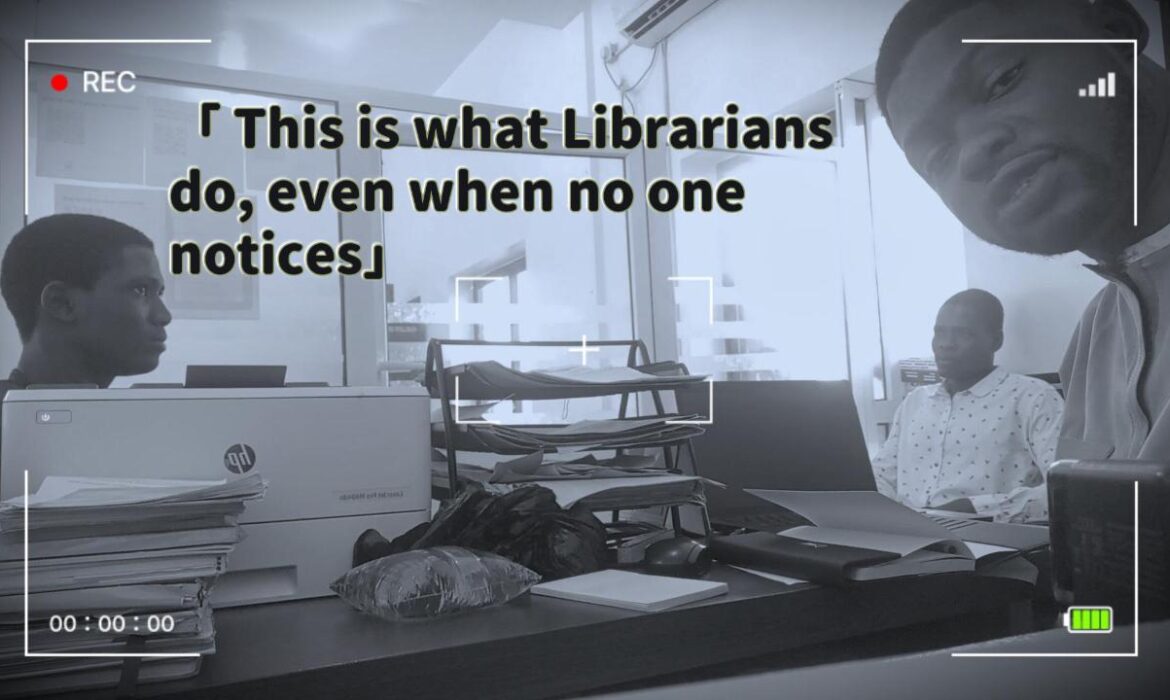
Today (5th January 2026) was supposed to be a ‘lazy’ first day back at work, because I was still trying to adjust myself and put my to-do list for the week together when my first library users of the year 2026 walked in. I honestly thought they had come to exchange pleasantries. Happy New Year. Small Talk, and then they’ll go.
But they actually needed help.
I offered them a seat and they explained that they needed clarification on a group project they had been given in a course, with just two weeks to submission. Specifically, they needed reviews on their idea, some guidance on creating graphics, and suggestions on the right resources to use.
I asked for their permission to record the session without the audio, just the process and they agreed.
What followed was not what they expected.
Just as we are taught in library school, users often do not express their real information need at first. It is through careful questioning and professional listening, what we call the reference interview — that the real need becomes clearer. They had actually come with an idea they felt confident about. Innovative, yes. But as they explained it, it became obvious that it did not fully align with the goal of the assignment. That only became clear because I did not interrupt them by rushing to solve the problem and this changed the direction of the session.
Now, this short, silent video captures what a real reference and consultation moment looks like. Nothing was rehearsed, it was just librarianship in practice.
That listening changed the direction of the entire session. Now, this short, silent video captures what a real reference and consultation moment looks like. Nothing was rehearsed, just librarianship in practice.
There are lessons here that I hope librarians, LIS students, and even those outside the profession may find helpful:
- Librarians listen before they advise: The solution didn’t come from talking first. It came from making the student comfortable and understanding their problem (assignment) properly. Listening to them helped in making the gap visible.
- Understanding the assignment matters as much as understanding the topic: Many projects fail not because students lack ideas, but because the ideas do not answer the question that was asked. Helping users see that distinction is part of our work as Librarians.
- Librarians think on paper, not only in their heads: A pen, a jotter, or an internet enabled device/computer is a librarian’s companion. Note taking is a serious deal for us. I summarized key points as we spoke. At the end of the session, they relied on my notes and asked to take a photo to guide their next steps.
- With Librarians, teaching naturally happens: There was no official lecture or presentation of slides, yet learning happened. This is one thing I love about librarianship. We always… By the end of the session, they understood why their original idea needed adjustment and how to move forward with clarity.
- Librarianship is relational: Nowadays you find most students relying on ChatGPT for brainstorming on related issues like this. They could easily have searched online for clarity. But what happened here was not just information delivery. It was context, judgment, reassurance, and direction provided by a human librarian. This experience challenges the idea that technology can replace the librarian’s role.
- Ethics and consent are part of professional practice: The recording only happened after permission was given. No private details was shared and respect for users is not optional, even when documenting impact.
- Evidence of impact is very important: In some environments where people say librarians do nothing, evidence helps you speak. For many years, I have used reference interview forms to document user needs and outcomes. This year, I hope to experiment other responsible ways of capturing impact.
So, this was how my first day back at work looked like:
- No books were shelved.
- No one was shushed.
- No cataloguing
- But Librarianship happened 🤓!
Sylvester Ebhonu (TheDL)
Amiralty University of Nigeria, Ibusa

