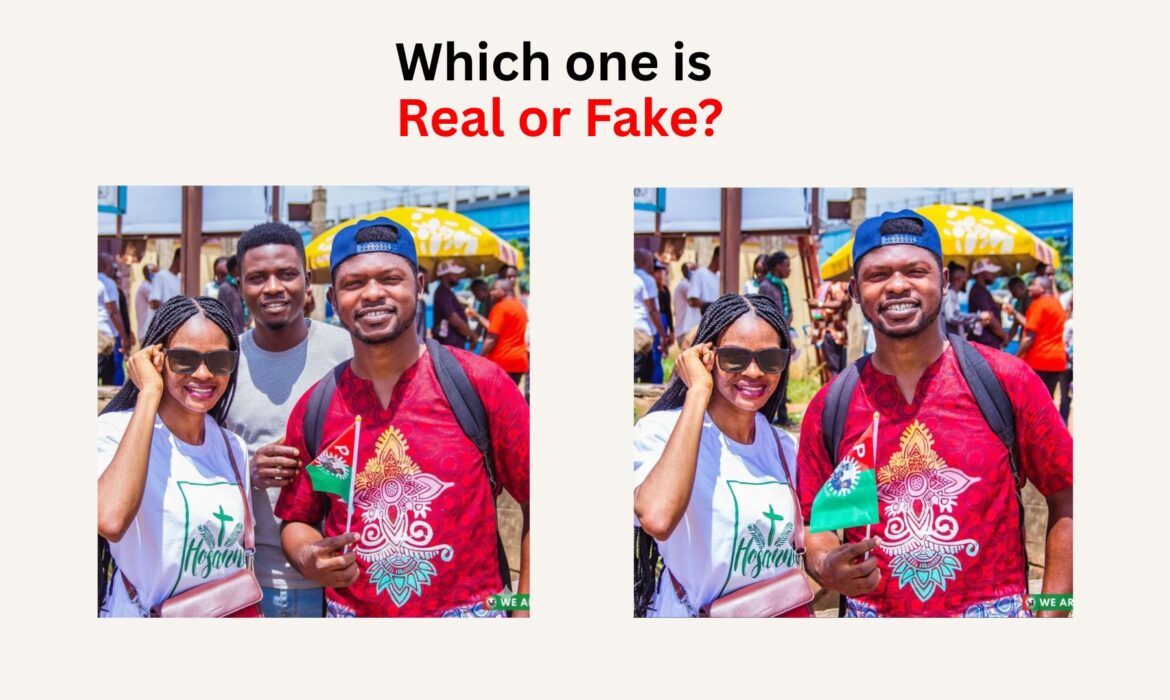
Today, January 28th, being World Data Privacy Day, I decided to run a small AI experiment after working hours. Take a look at the two images attached to this post: One of them is an original photo and the other is an AI-generated version where you’ll see that a third person was added seamlessly into the group.
It took me less than 2 minutes to change the state of the photo.
Today, the internet is now flooded with AI Slop and deepfakes.
It’s a great idea and usually fun for many content creators, but this ability raises a serious question for all of us, especially in this year, 2026: ‘Who owns our digital identity and how do we control what we put out there?’
In another experiment, I tried to push the AI further by asking it to create a specific physical interaction (like a peck on the cheek). The AI refused. So, I assumed that there was some sort of layer of Data privacy or safety guardrails that may have been built into the model, which prevents it from creating non-consensual or synthetic intimate moments that never happened.
How I see it though, is that, we still need to be vigilant, because… anyone could outsmart these AI systems through prompt injection techniques that makes the model thinks its doing something ethical.
I couldnt think of a better day than today, dedicated to mark #DataPrivacyDay, for us to remember that Consent is very important.
Just because generative AI platforms like Gemini’s Nano Banana, Grok, and other platforms allows us to add or remove people or manipulate images and videos doesn’t mean we have the right to do so without permission. It all boils down to the Responsible Usage of AI. We must acknowledge that these tools can easily be used to create false narratives or proof of events that may have never happened.
Considering the theme for the celebration, ‘Take control of your Data’, let us endeavour to be very, very mindful of the data we share, the tools we use, consciously protect our digital identities, and endeavour to consult with Librarians to learn about Responsible AI/Digital Literacy.
– Sylvester Ebhonu (TheDL)